2026 · Game Design / UX/UI / Claude Code

MINTH TD
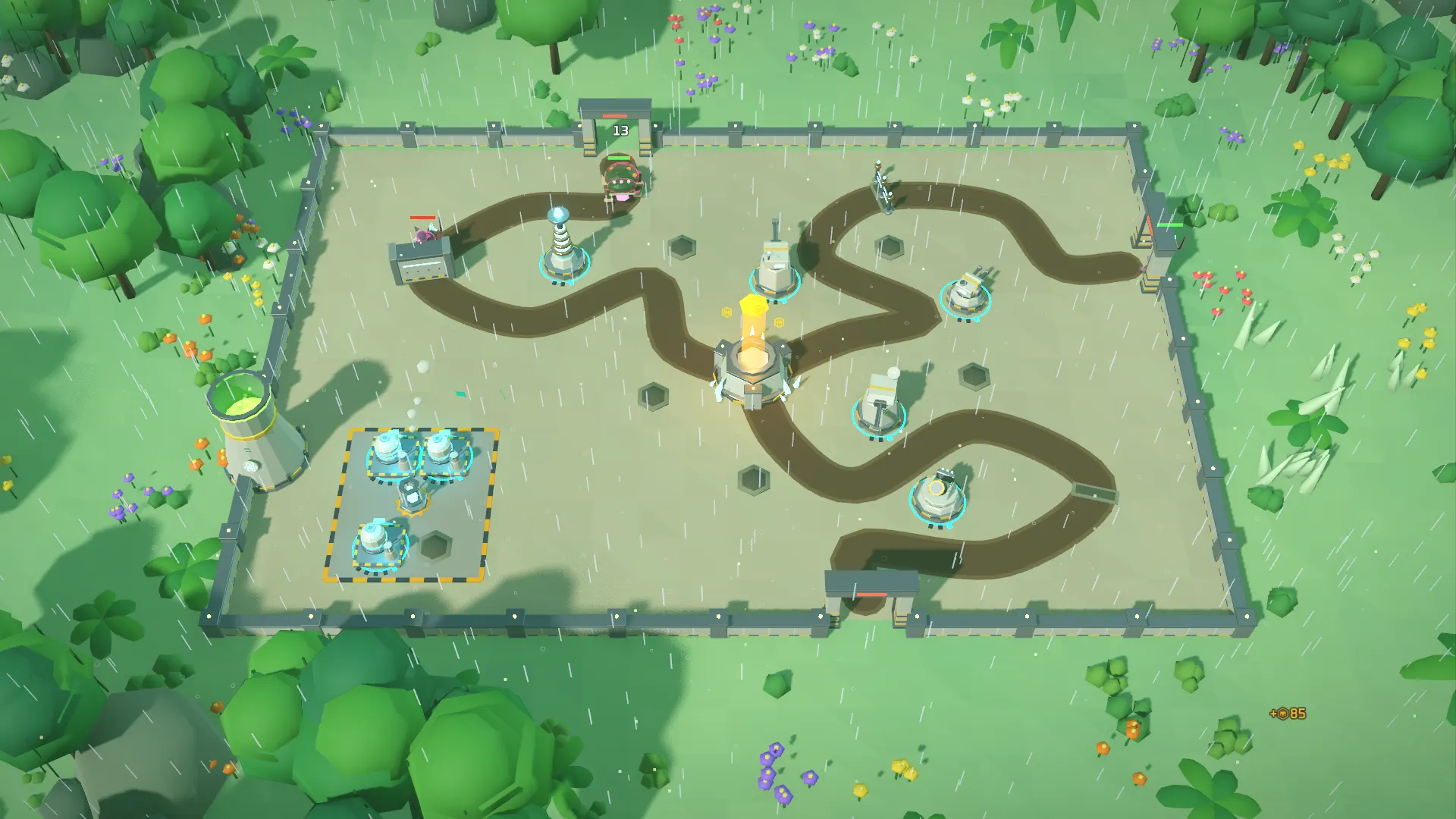
My first game: a sci-fi tower defense for PC with RPG, incremental and management elements. Print Minth, grow and defend what you produce: the more you produce, the more they see you. Free on the Microsoft Store.
— Role sheet
- Role
- Game & Product Designer
- Team
- Solo project
- Duration
- 19 days to the Microsoft Store
- Platform
- Windows (keyboard and mouse)
- What I did
- Everything: game design, UX/UI, Design System and AI-assisted development
— Context
My first game: from player to designer
MINTH TD is the first game I have ever made. I have always been a player, the kind who has no problem spending dozens of hours a week playing, and this time I wanted to be on the other side: design and build a complete game, from the rules and balance to the interface, 3D art, sound and release on a real store.
It started as a personal challenge that I completed a while ago, but I became obsessed with improving it and adding features. That is where the real challenge appeared, more mental than technical: holding myself back and being selective with my ideas, keeping the ones that made the game better and leaving the rest out.
— Solution
Producing makes you visible
At its core it is a tower defense, with layers of RPG (factions, a commander and a perk tree), incremental (production that grows in real time) and management (deciding where to invest every Minth). Each faction prints Minth, the currency of the Névara galaxy. Reactors produce in real time during the siege and every kill pays, but the more you produce, the more they see you: the threat rises and the next wave hits harder. The Silent, Normal and Overload modes switch live, so the player decides at every moment how much risk to take.
Around that core I designed progression that carries over between matches (a Command perk tree, a building shop, contracts and achievements) and an interface built from a Figma Design System, with the same tokens in the design and in the game code.
— Features
A complete game, from rule to store
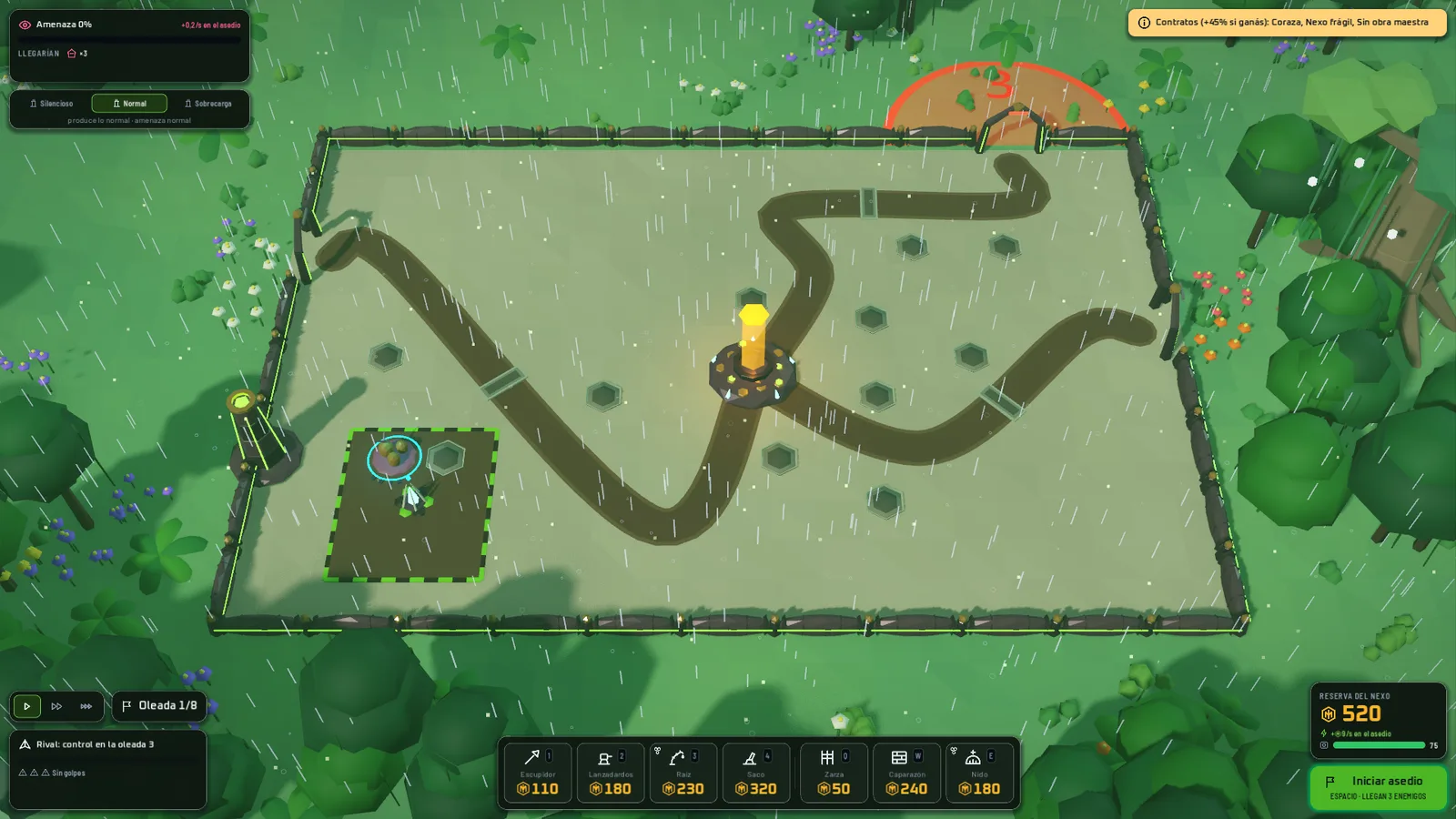
Real-time economyproducing has a price
Starting capital, production per second during the siege, a bounty for every kill and a bonus for clearing the wave. Producing raises the threat: what you print in one wave makes you visible for the next.
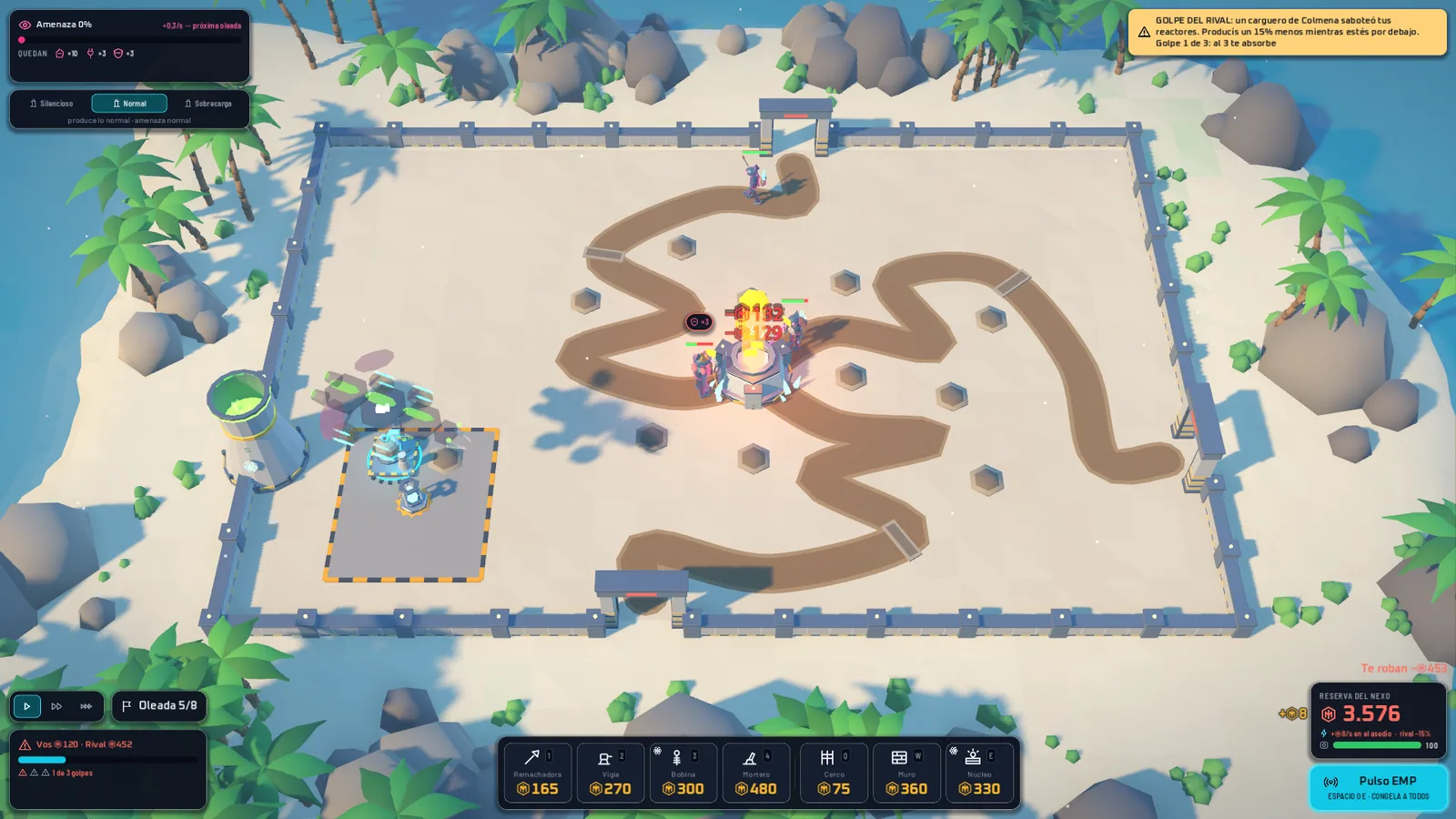
Siege and rivalsomeone else wants your Minth
Eight waves per operation, with a possible boss. A rival competes for the same Minth and sabotages your reactors, thieves steal from the reserve and the EMP Pulse freezes everyone at the right moment.
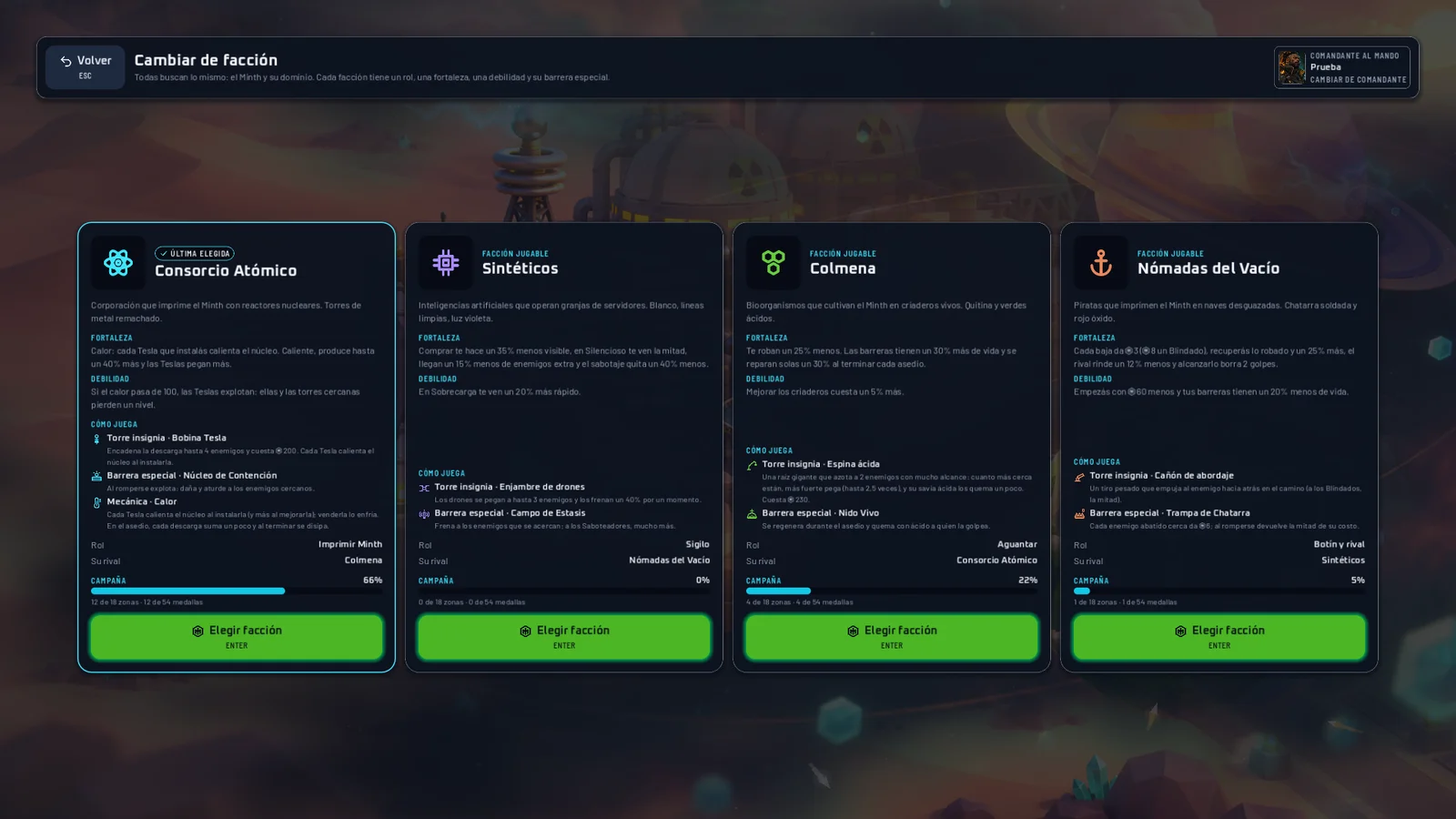
Four factionstheir own rules, not just skins
Atomic Consortium, Synthetics, Hive and Void Nomads: each with a role, a strength, a weakness, a signature tower and a special barrier. They change how you play, and the interface takes on each faction's skin.
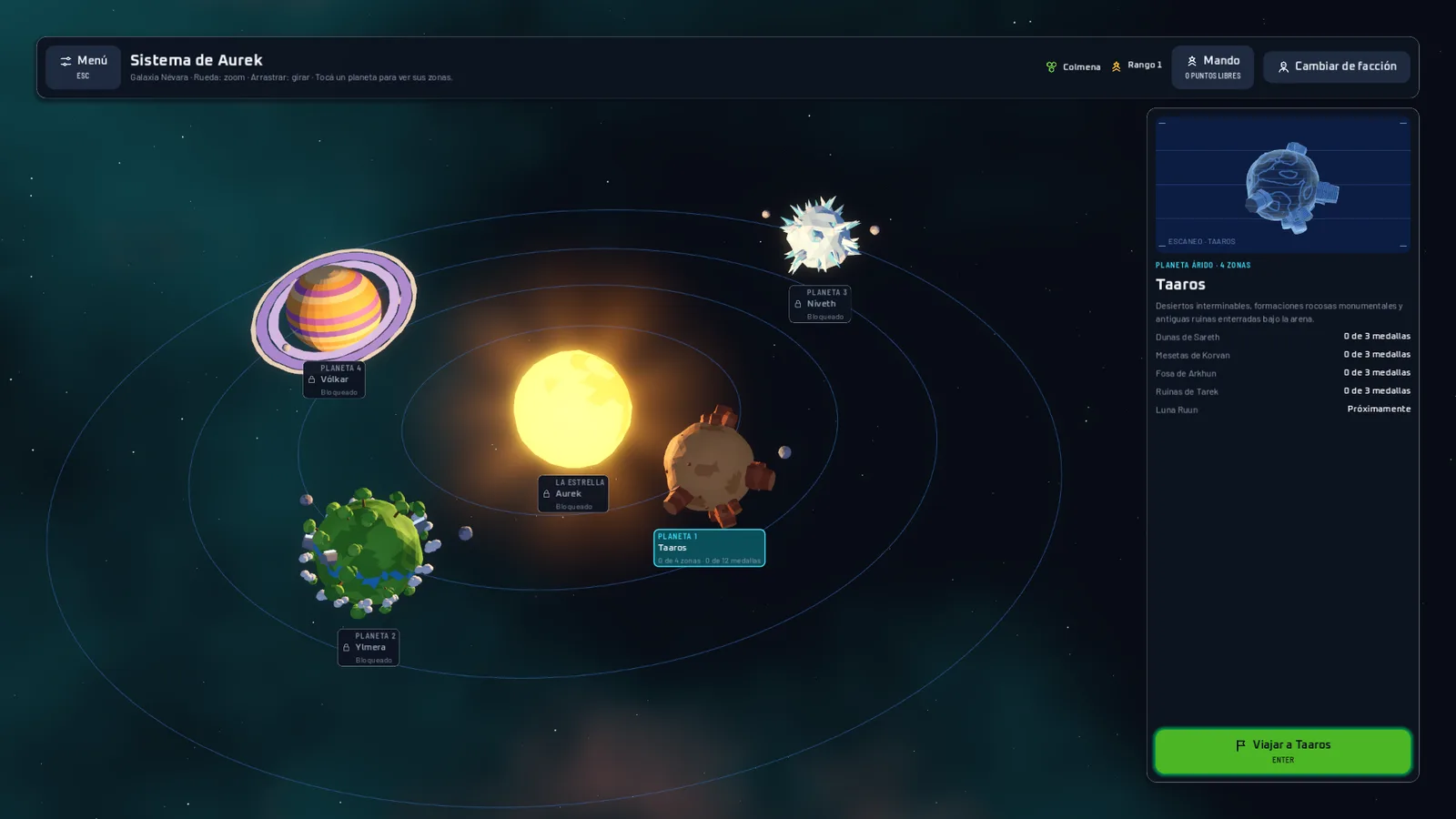
A galaxy to explore54 maps across 5 worlds
Four planets and a star, 18 zones with bronze, silver and gold medals, twists that change each map (frost, rifts, fog, currents) and a visual style of its own for each biome, modeled in Blender.
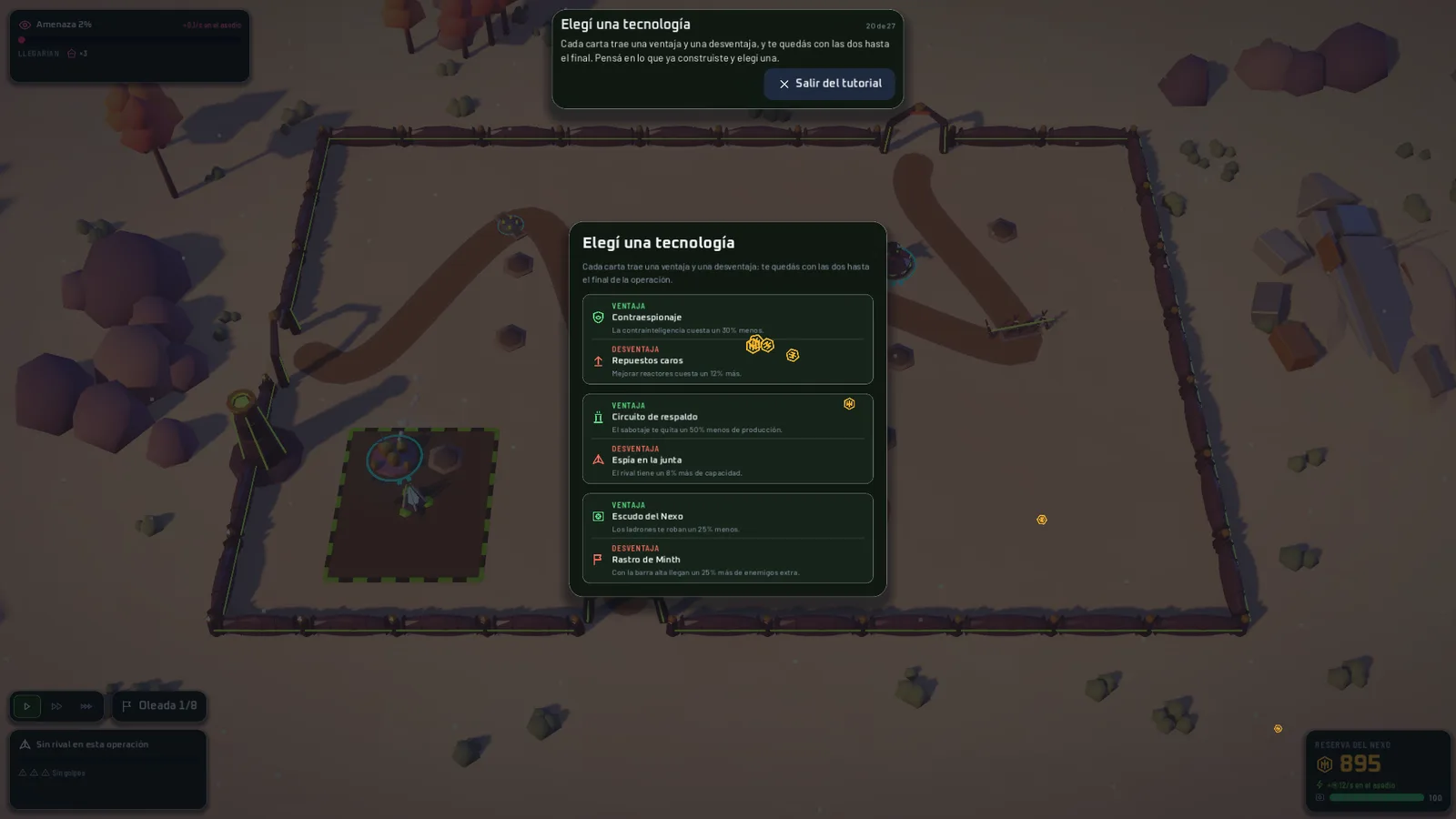
Technologies with a costevery upside has a downside
Between waves you pick a card: an upside and a downside that stay until the end of the operation. It makes you think about what you already built instead of stacking free upgrades.
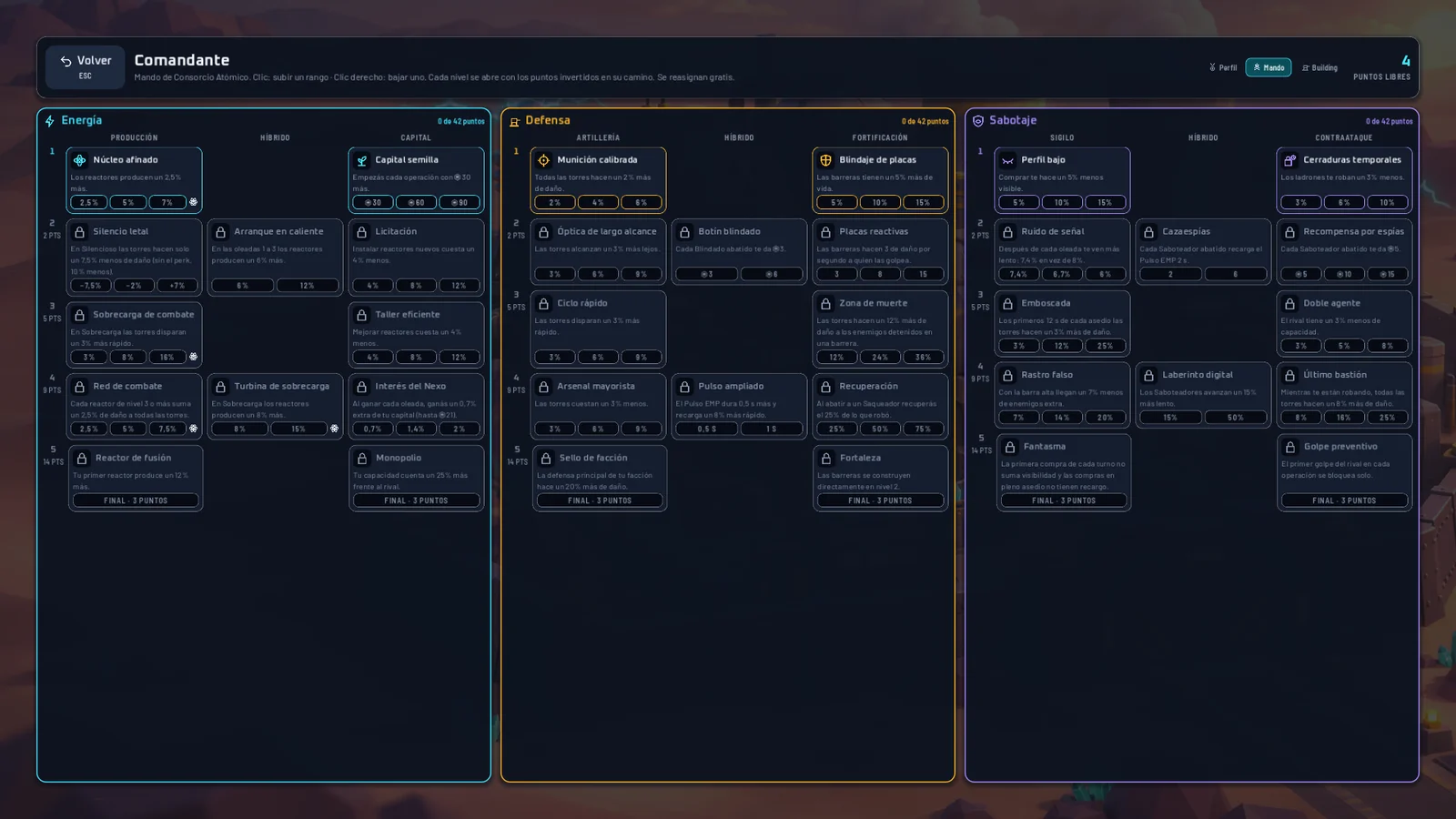
Progress that sticksCommand, shop and achievements
A 36-perk tree in three branches with ranks, a building shop to assemble each faction's build, contracts that toughen maps you already won in exchange for bigger rewards, and 96 achievements.
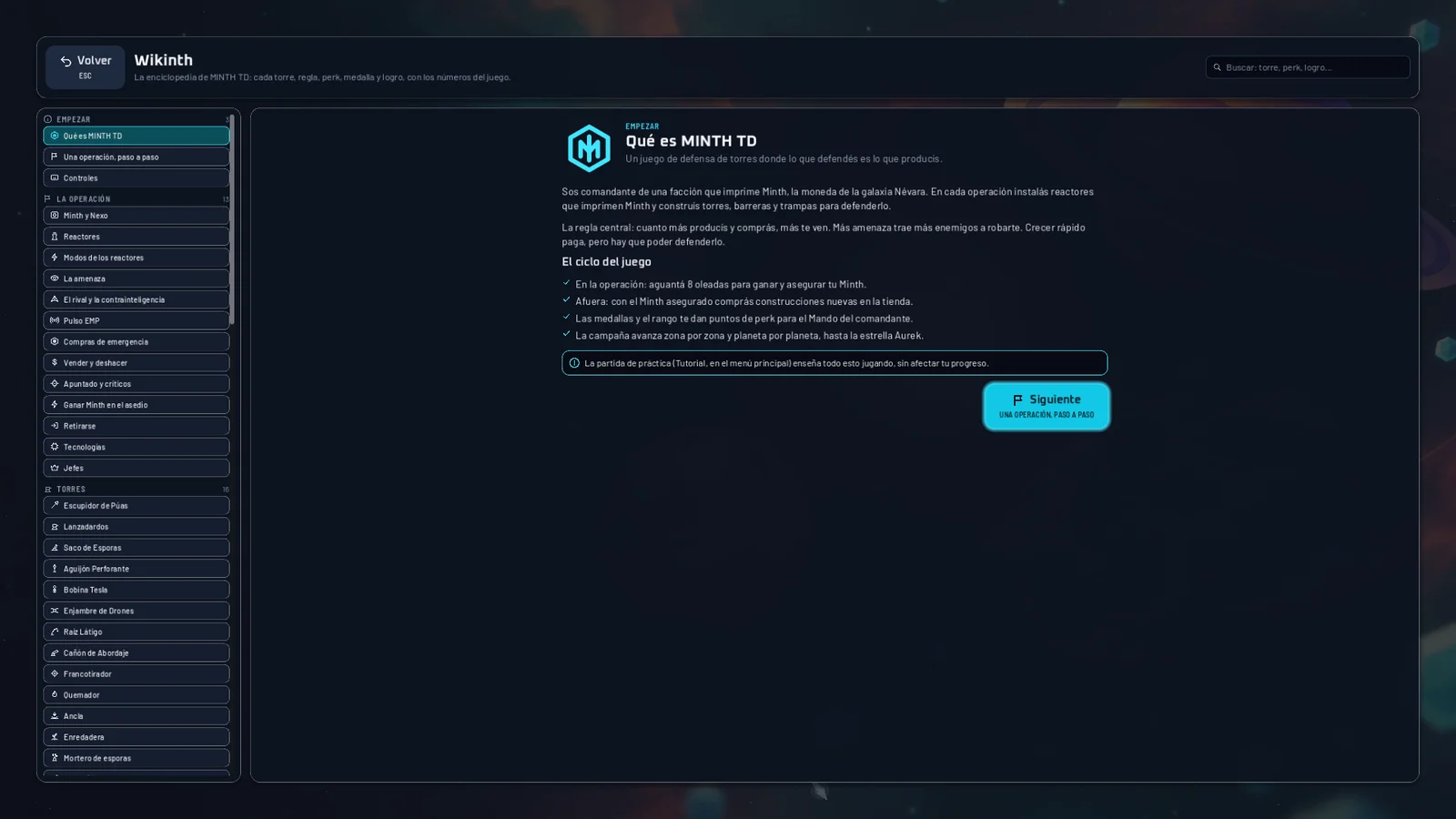
Learning by playingtutorial and Wikinth
A 27-step playable tutorial that dims the screen and highlights each control, and the Wikinth: 93 articles covering every tower, rule and number in the game, generated from the same data the game uses.
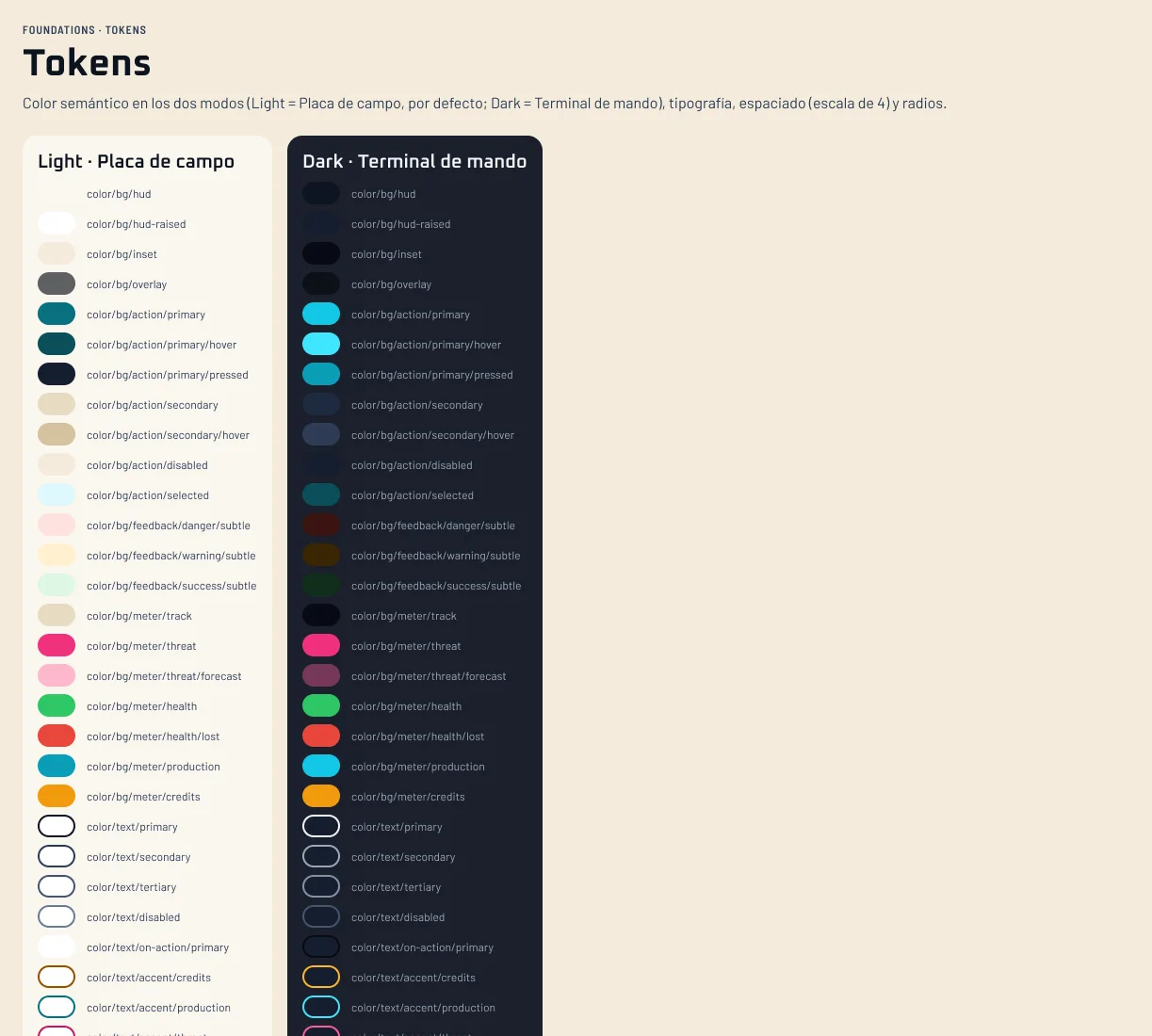
Design Systemfrom Figma to the HUD
Every screen is designed first in Figma with Atomic Design: semantic tokens in light and dark mode, atoms, molecules, organisms and the game screens. Text pairs pass the AA contrast audit.
— Tech stack
Technologies behind MINTH TD
Godot 4.7 with GDScript: the rules live in a core with no visual dependencies, and the 3D world and the interface only read the state. A Python simulator replicates the same rules so bots can play thousands of matches and calibrate the difficulty of every map and faction. Low-poly models come from Blender, connected through MCP; sound comes from Freesound (CC0 and CC BY) with custom loudness mastering; and the game ships as an MSIX package on the Microsoft Store. All development was done with Claude Code.
— Results
Development and launch
19
days from the first commit to the Microsoft Store submission
54
maps calibrated with bots for all 4 factions
5,704
automated rule checks in the latest version, 0 failures
— Key decisions
Decisions that shaped the game.
Real-time economy: no collection turns
The problem
The first version paid out in turns: three Minth collections in each planning phase and a siege you just watched. The game worked, but the incremental part happened between waves and combat had nothing to do with money.
The options
- —Keep collection turns: fine-grained control and easy to balance, but the siege stayed passive
- —A hybrid with turn collections and some siege rewards: two rhythms competing with each other
- —Real-time economy: production per second during the siege, a bounty per kill and a bonus for clearing the wave
The decision
I chose the real-time economy: watching Minth grow while the towers fight is the blend of tower defense and incremental I was after. To keep it from being free money, producing raises the threat of the next wave. What I gave up was the fine control of turn-based planning, and I had to recalibrate the whole balance.
Balancing with bots: not by eye
The problem
With 54 maps, 4 factions, perks, technologies and contracts, there are hundreds of combinations. Playing each one to tune difficulty was not possible, and tuning by eye leaves maps that are impossible or trivial.
The options
- —My own playtests only: they give the real feel, but cover a tiny fraction of the combinations
- —Spreadsheets with formulas: fast, but they don't capture how a real match plays out
- —A simulator with the same rules as the game and bots of different skill that play thousands of matches
The decision
I built a Python simulator with the same rules as the game and skilled and expert bots. Each map has a win-rate target per faction and is calibrated until it lands in range; playtests are for what a bot can't measure: whether it's fun. The cost is keeping two identical implementations of the rules, verified with reference matches.
The interface comes from Figma: Design System before code
The problem
A strategy game has a dense HUD: threat, production, rival, reserve, building and alerts all at once, with four faction skins and light and dark mode. Designing straight in the engine leads to inconsistent screens that are hard to maintain.
The options
- —Design straight in Godot: fast at first, but every new screen reinvents its values
- —Loose Figma mockups as reference: a better starting point, but they go stale right away
- —A Figma Design System with tokens shared with the code and a contrast audit
The decision
I built a Design System with Atomic Design and semantic tokens the game uses as is. Every new screen, like the startup sequence, is designed in Figma first and built afterwards. The cost is that every interface change goes through two places, but the game stays consistent and readable across all four factions.
— Next steps
Play MINTH TD for free
Available on the Microsoft Store for Windows. No purchases or ads, single player, in Spanish.